

-
About UsShandong Blue Ocean Crystal Technology Co., Ltd. was established in 2019. It is an innovative enterprise focusing on the research, development, production and sales of fully biodegradable materials and high-performance single crystal fibers and composite materials. Its headquarters and R & D base are established in Gangcheng District, Jinan City.
-
ProductsShandong Blue Ocean has been developing, producing and promoting products that can effectively improve the performance of materials in various environments as the cornerstone of the company's development, and is committed to providing customers with high-quality materials to meet the needs of different fields.
-
China's Degradable Plastics Policy, Standards and Demand
Release time:
2024-02-01 09:51
1. industry policy
Internationally, in October 2019, the European Parliament passed a bill to control the incidence of marine plastic waste, restricting the use of six types such as cotton swabs, disposable knives and forks, disposable dinner plates, disposable straws, beverage stirrers and balloons, and reducing the use by 25% by 2025.
On January 16, 2020, the Chinese government issued the "Opinions on Further Strengthening the Control of Plastic Pollution". This is my country's first national plastic reduction policy, and local governments have prepared specific implementation plans. On February 21, 2019, the Hainan government issued the implementation plan for a total ban on the production, sale and use of disposable non degradable plastic products in Hainan Province, which stipulates that the production, sale and use of disposable plastic bags and disposable plastic tableware will be completely prohibited in Hainan Province in December 2020. Before the implementation of the Opinions on Further Strengthening the Prevention and Control of Plastic Pollution in 2020, 80% of degradable products will be exported. According to the Opinions, by 2020, 2022 and 2025, degradable plastic products will be mainly used for domestic demand. Biodegradable plastics will be used for disposable plastic bags, disposable tableware and fast packaging bags. Different provinces and cities have also issued policies to ban the use of non-degradable disposable plastics and promote the use of degradable plastic bags.
The government has issued a series of industrial policies to encourage enterprises to produce degradable plastics and guide the market to use degradable plastics.
In September 2021, the 14th Five-Year Plan introduced a policy on the use of degradable plastics. The National Development and Reform Commission issued the "14th Five-Year Plan for the Development of Circular Economy", which proposed "adapting measures to local conditions, actively and steadily promoting degradable plastics, improving the standard system, improving inspection and testing capabilities, and standardizing application and disposal". Guide the biodegradable resin industry standard, orderly, rapid and healthy development.
Local governments, such as the policies issued by the Shenzhen Ecological Environmental Protection Bureau: R & D funding projects, 50% funding for degradable plastics research and development, up to a maximum of 10 million; Planning and construction of two degradable plastics industry demonstration bases, the government invested in platform construction funds, and appropriate subsidies for rent. Shenzhen supports the research and development and promotion of degradable and replaceable plastic products. Shenzhen has organized and implemented the first batch of support plans for the development of strategic emerging industries in 2020, set up special funds for circular economy and energy conservation and emission reduction, and supported degradable plastic enterprises to apply for green manufacturing system. With the support of this policy, many enterprises in Shenzhen have made technological breakthroughs in the production of degradable plastics.
2. standard
According to different degradation environmental conditions, biodegradable plastics can be divided into soil degradation, compostable degradation (including traditional composting and courtyard composting 2), freshwater environmental degradation, seawater environmental degradation, sludge anaerobic digestion, high solid anaerobic digestion/outdoor degradation environment.
The detection methods for degradable plastics in different degradation environments are different. The detection standards for biodegradable plastics in China have made rapid progress. Except for seawater and outdoor standards, most of the standards have been established, and the standards have been benchmarked against international standards (Table 3, Table 4 and Table 5).
For the above biodegradable resin varieties in a very short period of time can achieve complete degradation, and can meet the international mainstream degradation standards. The EU degradation standard EN13432 stipulates that the relative degradation rate is that at least 60% of the total organic carbon in the sample is degraded into carbon dioxide under the condition of industrial composting (58±2 ℃) for 180 days with oxygen, or the degradation rate of the sample cannot be lower than 90% of the reference material such as cellulose, which can be regarded as complete degradation. The above five varieties can meet the EU standard in degradation performance.
In March 2001, the National Plastics Products Standardization Center established the Biodegradable Plastics Working Group (BMG) in Beijing. Under the organization of the working group, ISO's method standards were standardized as ISO14851:1999, ISO14852:1999, and ISO14855:1999 national standards.
GB/T 20197-2006 defines the definition, classification, labeling and degradability requirements of degradable plastics, but the standard has a history of nearly 15 years, and its applicability has been reduced, especially for photodegradable plastics. The European Union has banned the use of photo-degradable plastics under Directive 2019/904 in 2019.
In 2019, the actual output of synthetic degradable resin in China is estimated at 101600 tons. Among them, the market supply of PLA resin has been in short supply since 2019, which is expected to continue in the next five years. The price of PLA is about 16,000-30,000 yuan/ton, PBAT is about 21,000-25,000 yuan/ton, while the prices of PE and PP are 8800-12,000 yuan/ton and 6700-8500 yuan/ton respectively, which is 2-3 times that of regular polyethylene film material plastic, seriously affecting the promotion and application of PLA downstream products.
Due to the limitations of synthetic technology, product markets and capital turnover, some companies operate at half capacity. Currently, only PLA, PBAT and PCL have achieved mass production.
Market demand, according to statistics, domestic PLA resin 110000 tons and imported PLA resin 25000 tons total 135000 tons, and in 2020 China's market demand of at least 200000 tons, there has been a serious shortage situation.
Large multinational companies in the consumer packaged goods, retailers and food service industries have also made progress or announced their intention to significantly expand the use of biodegradable plastics, which is driving the demand for biodegradable packaging for fresh produce, food tableware and compostable bags.
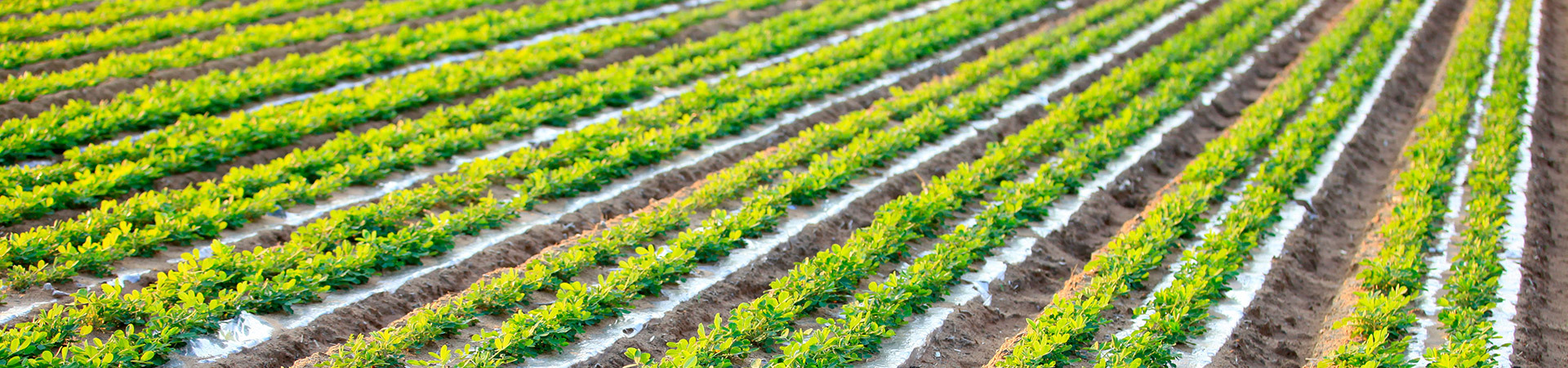
Flexible packaging uses nearly 500000 tons of biodegradable plastics worldwide. In many countries, agricultural mulch is used to increase crop yields. Traditional mulch is difficult to collect from the field and can lead to serious plastic pollution in the soil. Therefore, biodegradable mulch film has been tested and developed as an alternative. China has the largest area covered by mulch, with up to 2.5 million tons of mulch used annually. Assuming that 10% of the plastic film is converted to biodegradable every year, China alone needs more than 200,000 tons of biodegradable plastic film every year.
With the implementation of the policy of banning single-use plastics and the ban on online goods and food distribution e-commerce using non-degradable plastics by 2025, the demand for compostable bags has increased. In 2019, the number of food deliveries has reached 0.46 billion users, while urban residents are 0.84843 billion, accounting for 53.9 percent of the urban population.
In 2019, driven by the national environmental protection policy, the price of PLA rose from 19000/ton to 48000/ton. As far as degradable plastic products are concerned, compared with polyethylene plastic mulching film, the price of PBAT resin is 300 higher, the density of PBAT is 30% higher, and the thickness of mulching film is 20% higher. The overall price of degradable mulching film is about 3.5 times that of ordinary polyethylene mulching film. Price is one of the main factors restricting the widespread application of biodegradable resin.
Synthesis technology of PBS biodegradable resin: PBS products have gone through four stages of PBS, PBSA, PBST and PBAT. Currently, PBAT is the main type. The synthesis technology of the four varieties has matured. Tsinghua University and Institute of Physics and Chemistry, Chinese Academy of Sciences have mastered the core technology. Among the projects that have been put into production, Xinjiang Tunhe and Anqing Hexing adopt Tsinghua technology, Hangzhou Xinfu, Shanxi Jinhui and Shandong Huiying adopt the technology of the Institute of Physics and Chemistry of the Chinese Academy of Sciences, and Jinfa Technology adopts its own technology.
For the upstream synthetic raw materials of various biodegradable resins, PLA includes starch, lactic acid, lactide, glycolide and catalyst, PBS includes butanediol, succinic acid, adipic acid, terephthalic acid and catalyst, PPC includes carbon dioxide, propylene oxide, ethylene oxide, phthalic anhydride and catalyst, PCL includes ε caprolactone and catalyst, PHA includes starch and bacteria.
The use of modification technology can improve the original performance of biodegradable resin is not perfect, such as PLA heat resistance, toughening, strengthening, flame retardant, nucleation and filling, etc., have achieved remarkable results during the 13th Five-Year Plan period. In particular, PLA and PBAT are filled with low-cost materials such as starch, straw, bamboo powder, calcium carbonate, talc powder, etc., which can greatly reduce the cost by 10%-40%, and does not affect the complete biodegradation performance. It is recommended to promote and apply on a large scale.
Previous Page
Previous Page
RELATED NEWS
China's Degradable Plastics Policy, Standards and Demand
2024/02/01 09:51
2024/02/01 09:51
31 provinces have issued plastic pollution control related implementation plan or action plan
2024/02/01 09:51
Establishing a long-term mechanism for plastic pollution control
2024/02/01 09:51
CONTACT US
Add : No. 317, Shuangquan Road, Lilin Street, Gangcheng District, Jinan City, Shandong Province
Copyright 2023: Shandong Lanhai Crystal Technology Co., Ltd. Powered by:CEglobal SEO BUSINESS LICENSE
SAF Coolest v1.2 设置面板 EQMSX-ANDF-TSZQE-ZFA
无数据提示
Sorry, the current column has no content for the time being.!
You can view other columns or returnHome Page


